
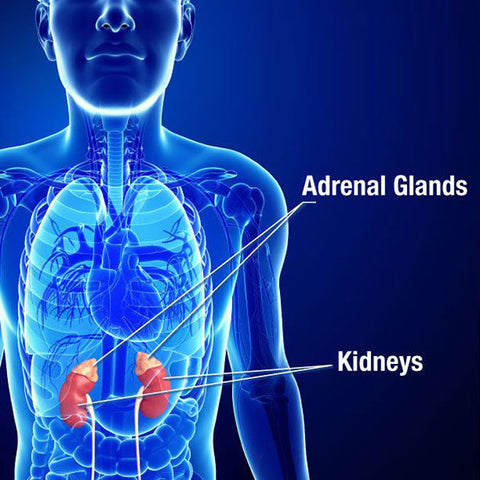
Let's start with where the adrenal glands are and what they do. The adrenal glands are small glands that sit above our kidneys. They produce hormones to help regulate our response to stress and also help control metabolism, immune function and blood pressure.
The adrenal glands secrete various hormones including the stress hormones cortisol, adrenaline and norepinephrine. Cortisol is considered the primary stress hormone, increasing blood sugar when stress is detected. This is an essential bodily function, however, when stress is quite constant this is when problems occur.
Think of it in Stone Age terms. When a human in the Stone Age was being chased by a wild animal, stress hormones were released to give him more energy to escape. The heart rate would increase, blood pressure would rise and more glucose would be released into the bloodstream. This is known as the ‘fight or flight response’ and is used to get people out of danger.
The problem is the adrenal glands can’t differentiate between physiological stress and psychological stress. Therefore, this response will occur just the same if we get stressed at work, with family or other issues.
Problems arise when an individual is chronically stressed, meaning they are constantly pumping out large amounts of stress hormones. Chronic stress is particularly common among people with stressful jobs and who are recreational endurance athletes, as they are releasing a large amount of stress hormones when training and through work, leading to a compromised adrenal function.
The main symptoms of high-stress hormone levels are:
This will all lead to lack of endurance in both general life and in a sporting context.

We can manage our stress hormones through our diet, lifestyle changes and supplements.
A key first step is balancing blood sugar - spikes in blood sugar cause stress hormones to flood the body.
Try restorative exercise like Yoga and Pilates. If you are an endurance athlete, make sure you are not over training. Take rest days and follow a hard day with an easy day.
Also try meditation, breathing techniques and other stress relieving activities. Get out in nature and read a book rather than watch TV before bed. Be mindful of screen time before bed as it significantly impacts quality of sleep.
Supplements should be taken to support a healthy diet and lifestyle and certainly not instead of!
The adrenal glands contain a high concentration of Vitamin C and highly stressed individuals show depleted levels, and a high dose Vitamin C has been shown to support the adrenal gland function.
Low levels of Magnesium have been linked to increased stress levels and Magnesium is a relatively common deficiency, particularly among women. Read our article "How do I know if I'm deficient in Magnesium?"
These are needed throughout the adrenal cascade, in particular Vitamin B5 for the conversion of glucose into energy.
These two herbs have shown to support the adrenals. They’re adaptogenic herbs which means they help the body adapt to stress. Evidence suggests Ashwagandha can lower cortisol levels in stressed individuals and help promote restful sleep.
A compromised adrenal function will affect your stress levels and endurance in all aspects of your life, however, a combination of adapting your diet, lifestyle and taking beneficial supplements can nourish these tiny but essential glands. In turn, they will thank you by increasing your endurance for years to come.
By Jonny Carter, BSc, MBANT, CNHC, Level 3 PT
http://www.ultimatepersonalwellbeing.co.uk/
Discover our range of vegan vitamins and supplements.
References
Your shopping basket is empty. Wondering which supplement you should take?
Our expert Nutritionists are here to assist you.


Subtotal
£0.00
Shipping and taxes calculated at checkout.


